

The Project
Focusing field geology by AI-Powered technology

RECONNAISSANCE
AI-powered technology scoured ~14,000sqkm area using geological data, geospatial imagery and aero geophysical data looking to locations with high Nickel-Sulfide probability.

STAKING HIGHEST PRIORITY
TARGETS
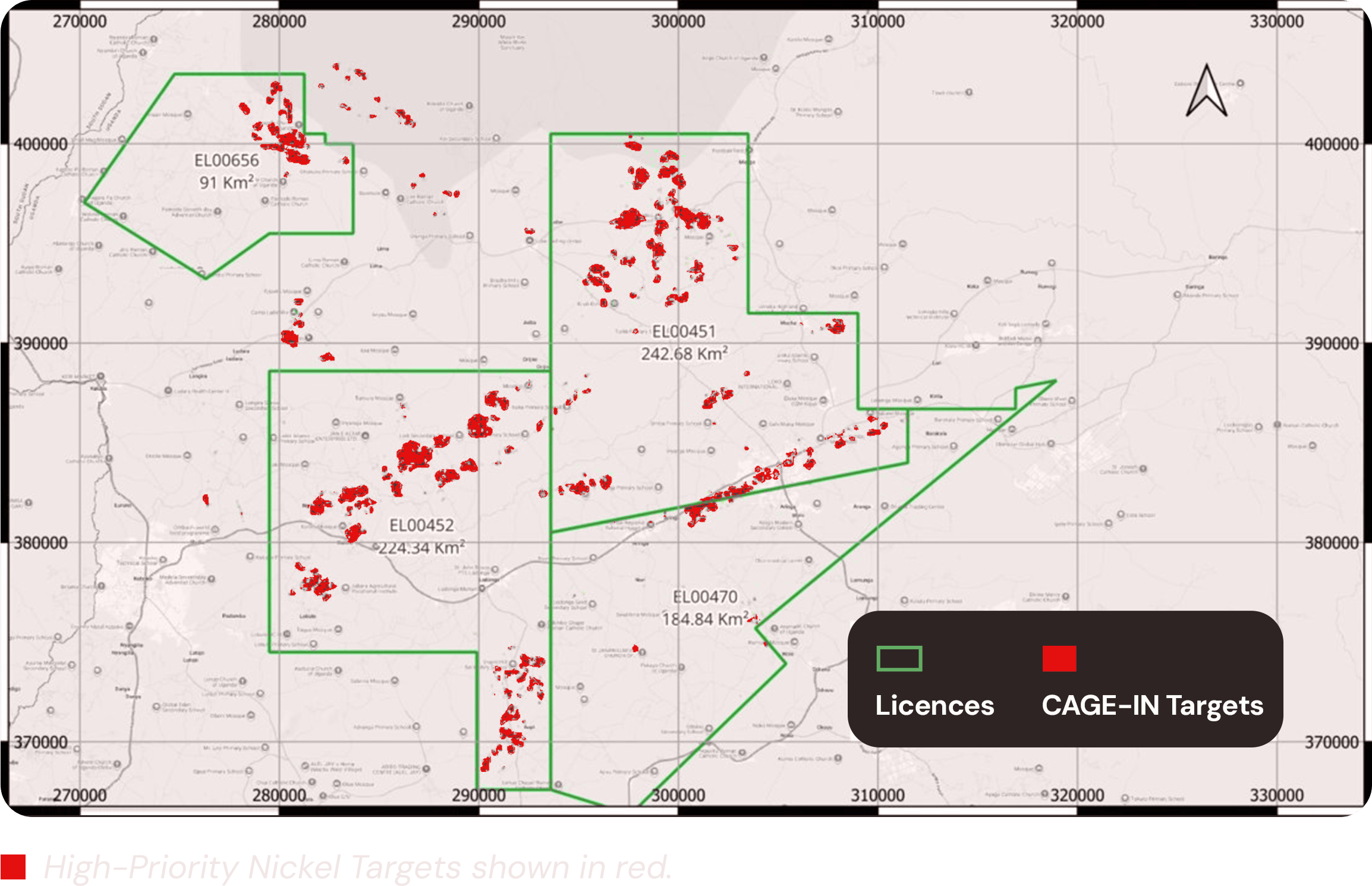
We have staked the highest-priority Nickel-Sulfide targets within Uganda, and now hold 74,200 hectares of highly prospective land.

LAUNCHED FIRST FIELD
CAMPAIGN
Confirmed signatures in the field and major grid-sampling program was launched. Incoming assay results suggest nickel enrichment patterns in areas predicted by CAGE-IN.
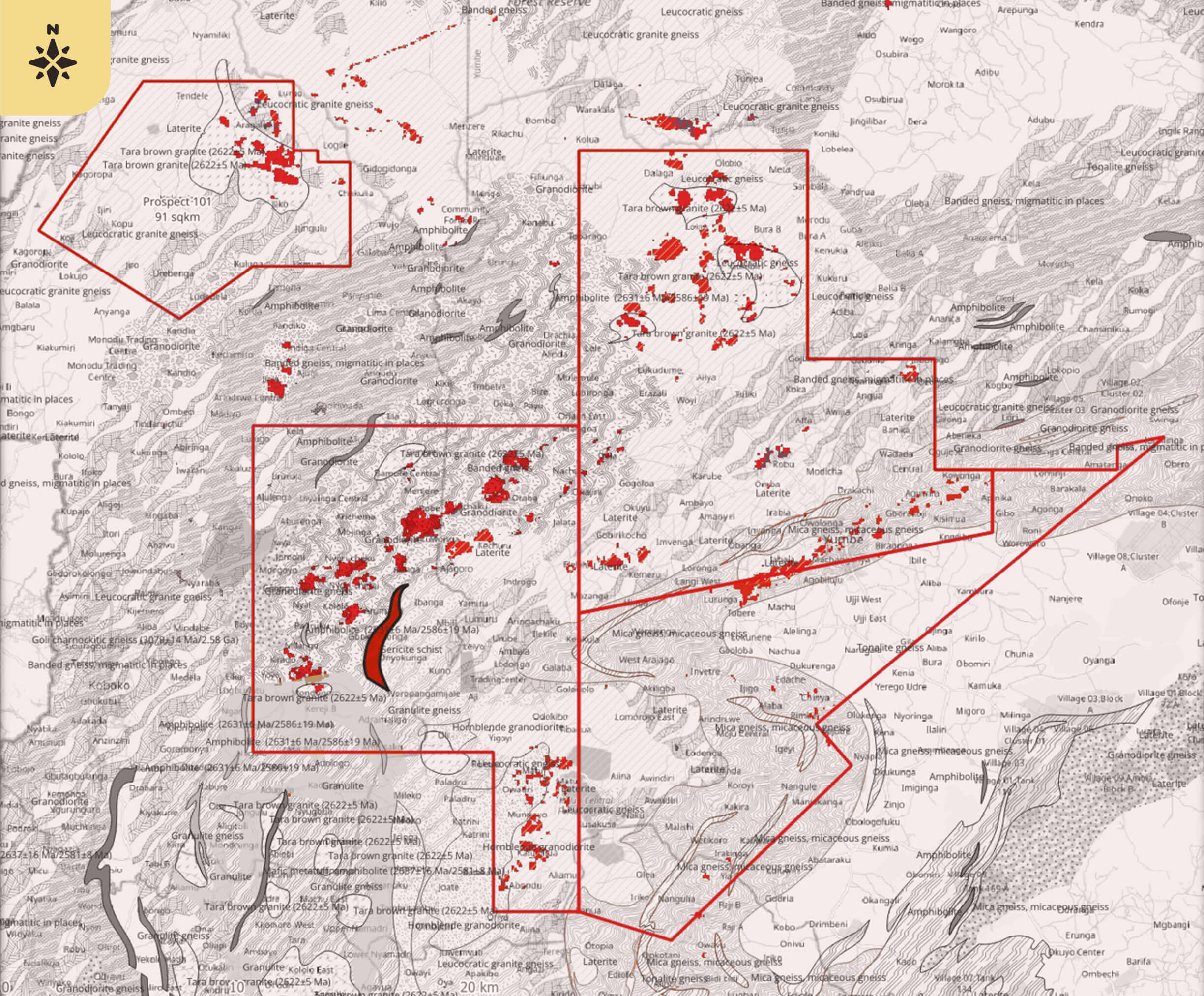

Aggressive Staking
Based on this data, we have staked some of the most prospective land in the northern-extension of the East African Nickel Belt.

Large Land Package
74,200 Hectares Our land packages combines to over 74,200 hectares of prospective land, which makes Nickelland one of the largest junior land holders in Uganda.

District Size
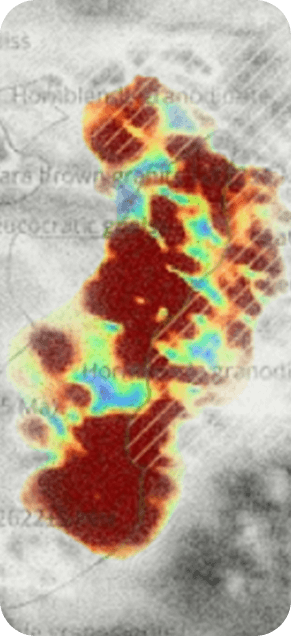
The high-priority targets (shown in red) are highly probable to contain structural intersections between an intrusive body and a massive-ultramafic zone, which matches the exact footprint of analogues within region.

SYSTEMATIC EXPLORATION
WORK DONE
Proof of Concept
We haven't just held the ground; we've worked it. The sheer density of sampling demonstrates a rigorous, systematic approach to defining the anomaly.


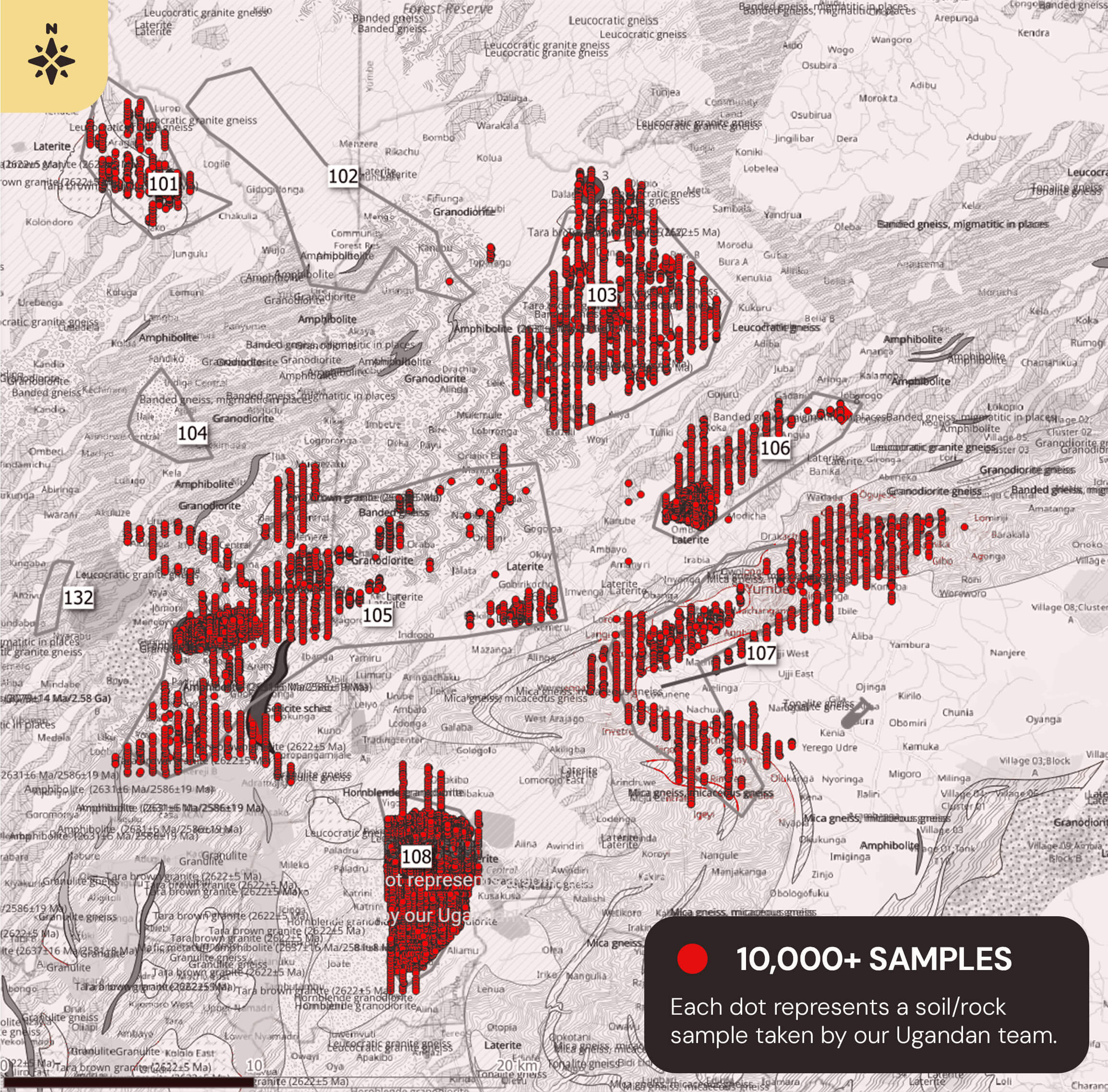
PHASE 1
We are finding the Nickel Results


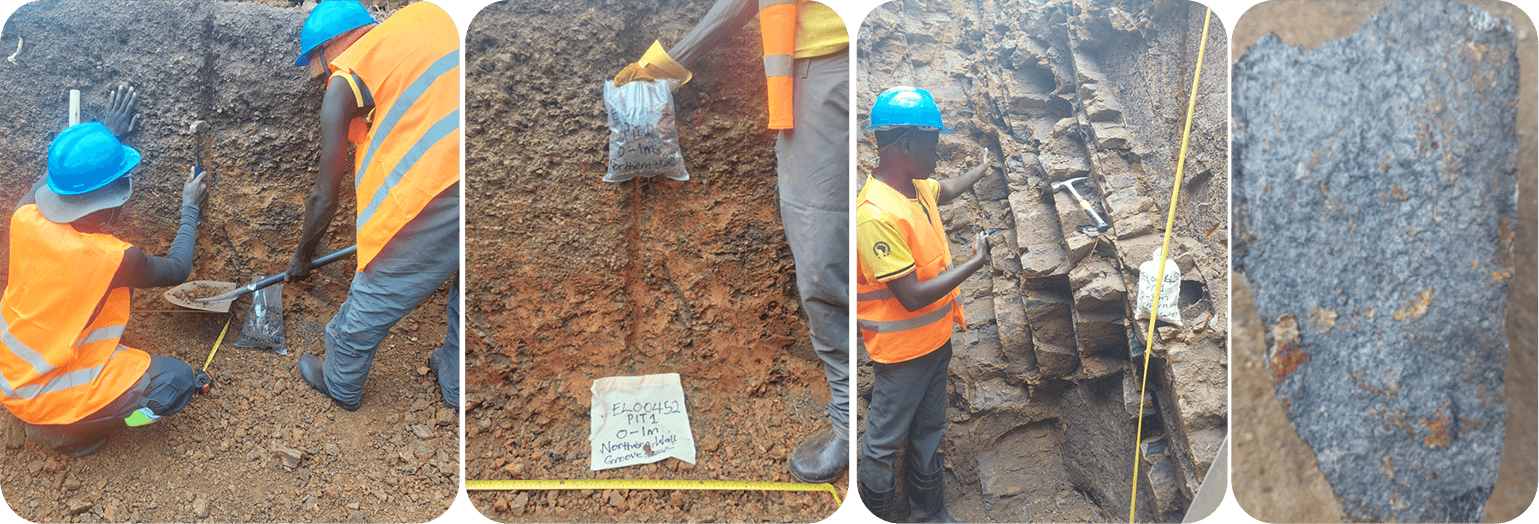
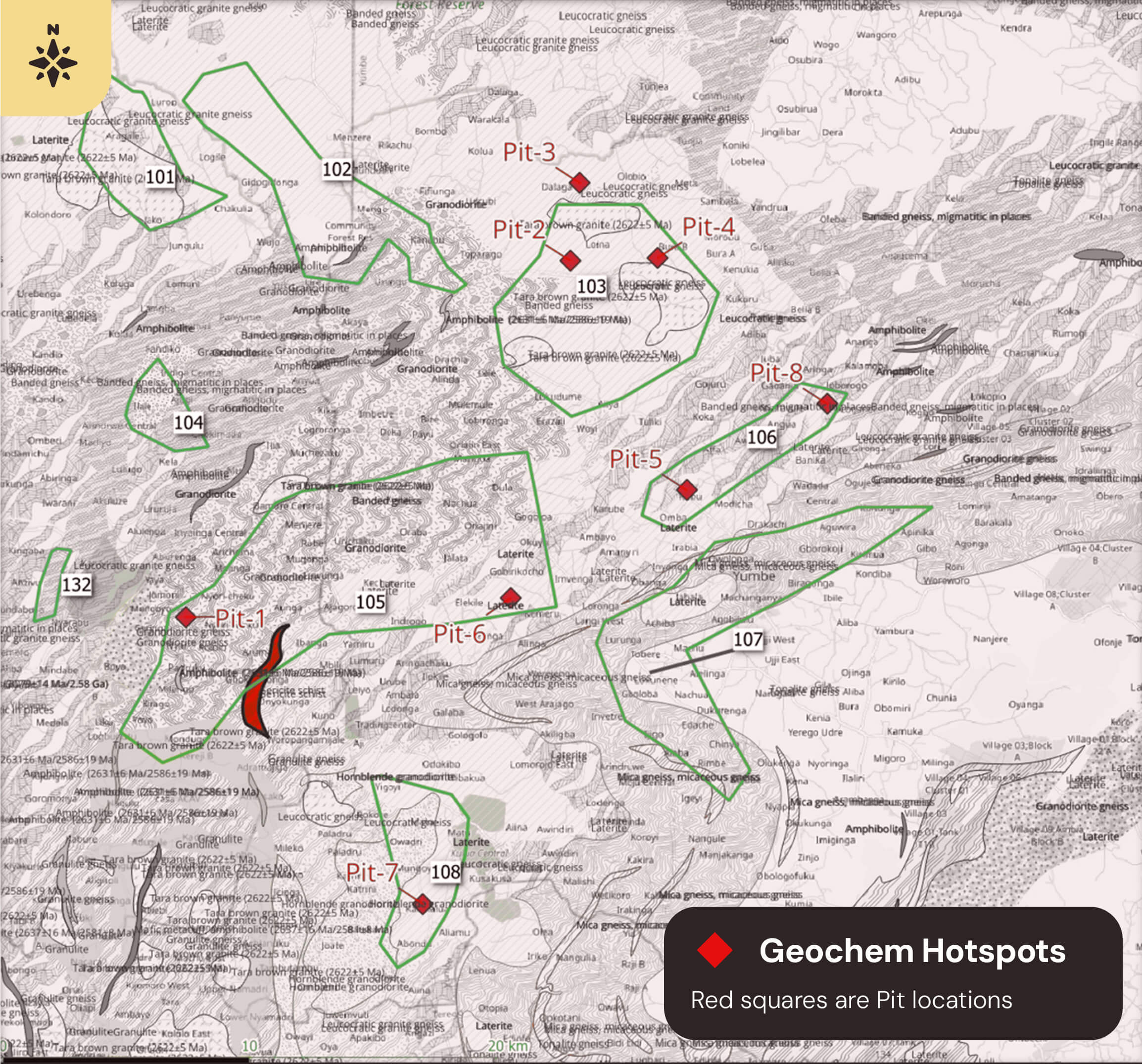
Initial geochemical results confirm the presence of high-grade Nickel and Copper, coincident with Cobalt.
| Target Zone | Sample Type | Ni (ppm) |
|---|---|---|
| Pit 1 Zone | Fluid coatings along structures | 11,717 (1.1%) |
| Drajini Trend | Fluid coating on structures | 2,352 |
| Regional bg | Soil Baseline | 50-60 |
| Enrichment zones | Anomalous Soil / Ferrecrete | +250 |
PHASE 2
Geophysics
EM & IP Surveys
Leveraging the Phase 1 Results, Targeted Ground-Based Electromagnetic (EM) and Induced Polarization (IP) Surveys are schedule on our highest-priority targets for the first half of 2026.
PHASE 3
Diamond Drilling

Diamond Drilling
Capitalizing on the results from our Phase 1 (Geochemical) and Phase 2 (Geophysics) campaigns, in combination with the AI-powered CAGE-IN dataset to generate drill-ready targets.

Maiden Campaign
The maiden campaign, designed to transition the project from a high-potential greenfield target to a Nickel-Sulfide Discovery, is scheduled to commence at the start of the second half of 2026.

Proposed 5000m Budget
The initial campaign is intended to commence with a 5000m budget, focusing on Nickel-Sulfide targets near-surface, maximizing the probabilities of an economic discovery.

Technology
Learning Technology

Founder Dr. Amit Tripathi has developed CAGE-IN (Constrained Area Gridding for Enhanced Interpretation) Artificial Intelligence and Machine Learning Technology, which allows for the exploration of hidden and deep structures that the human eye cannot see.
THE HOW
Employing CAGE-IN technology to target Nickel sulfides
KABANGA
CROSS-SECTION
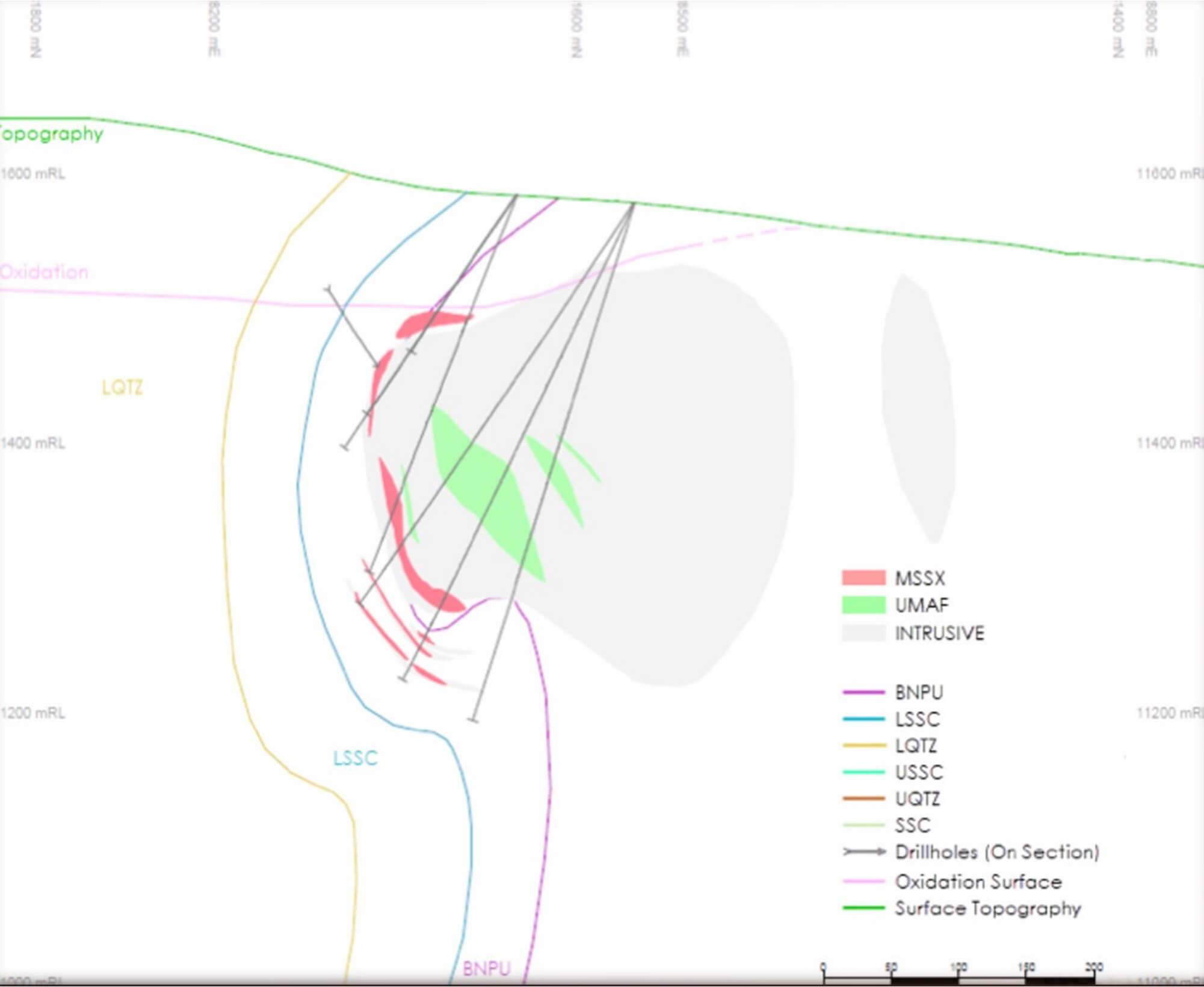
The Kabanga deposit serves as a great analogue in region, with significant size and grade, located just ~300 km south of us.
The Deposit's known nickel sulfide mineralization is primarily located at the structural intersection between an intrusive body and a massive-ultramafic zone.
The Deposit is known to have three key mineralization units: Massive sulfide, Ultramafic, and Intrusive styles.
CAGE-IN
TARGETTING
 (Nickelland Claims)
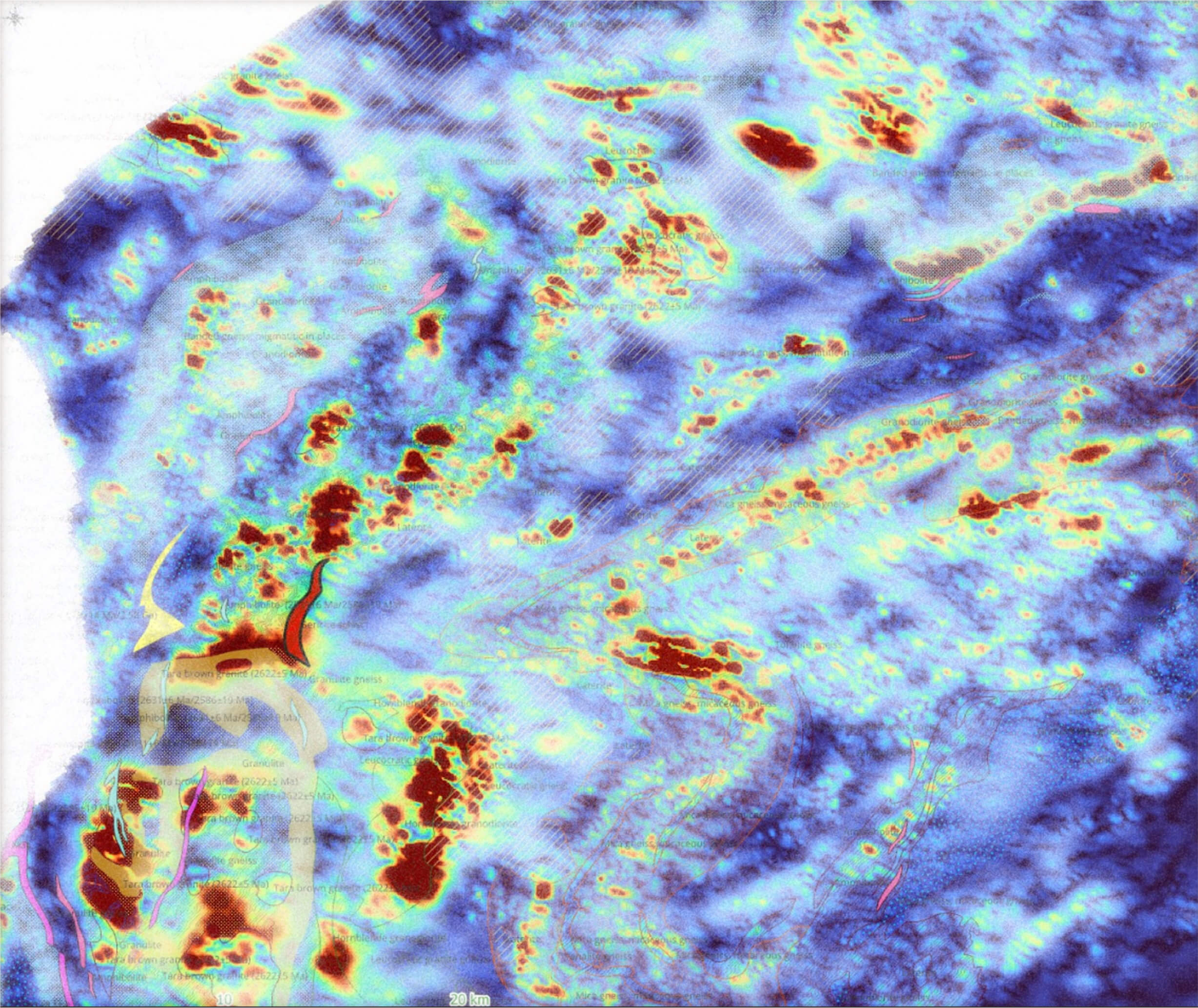
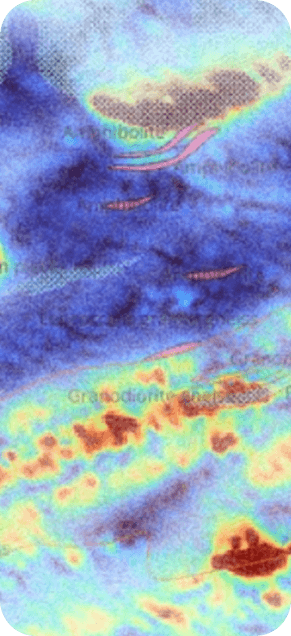
Our CAGE-IN approach systematically aggregates and analyzes diverse data signatures, such as geological, geospatial, geophysical and geomorphological, by leveraging Artificial Intelligence.
It identifies complex, deep-seated structural corridors and anomalies that exhibit similar 'fingerprints' as analogues within the belt.
CAGE-IN Technology (AI-Enabled)
Objective
Our immediate objective is to utilize CAGE-IN to delineate structural corridors with the highest geological probability of hosting Massive-Ultramafic style mineralization.
Priority Targets
High-priority targets (indicated in red) are selected because they demonstrate analog signatures to deposits in the region, such as the high-grade Kabanga Nickel deposit.
CAGE-IN
While CAGE-IN significantly refines the search space, its function is to de-risk and prioritize targets based on empirical evidence and regional geological models. New areas require validation through detailed sampling and drilling.